Denim Skirt with Lace Ruffle Pattern

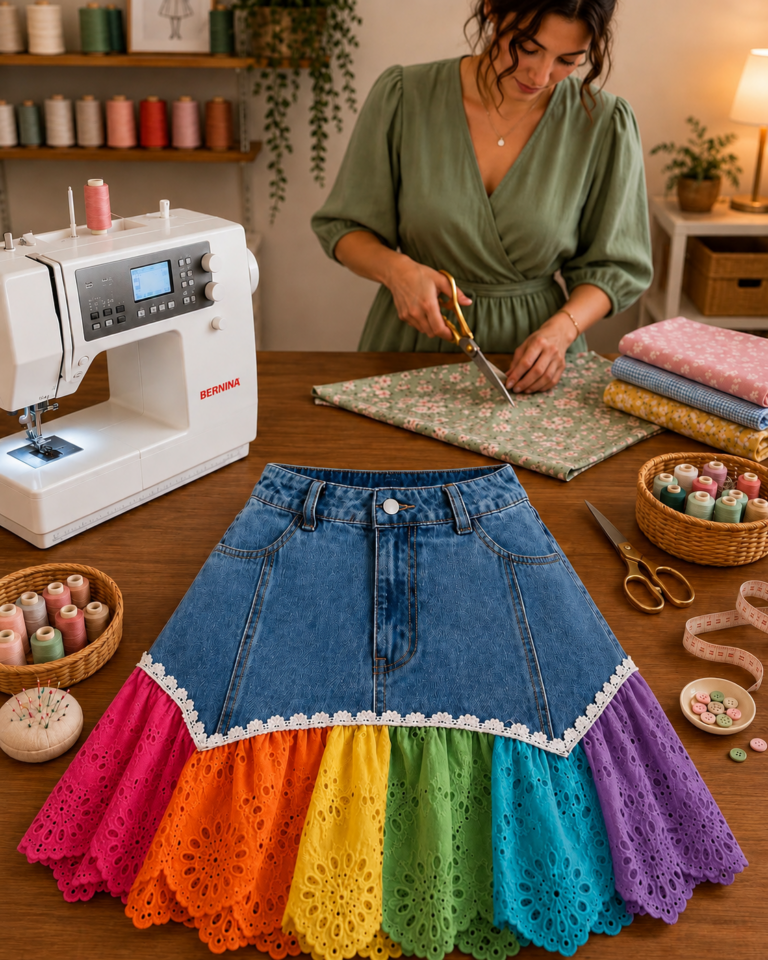
Denim Skirt with Lace Ruffle Pattern is a beautiful sewing project that combines the casual character of denim with the soft, romantic movement of a gathered lace or eyelet ruffle. Inspired by the design in the photo, this fabric skirt pattern is especially attractive because it can transform a simple denim skirt—or even an existing pair of jeans—into a completely different garment. The structured denim provides shape around the waist and hips, while the wide ruffled lower section adds movement, texture, and a charming handmade finish.
One of the most appealing things about this Denim Skirt with Lace Ruffle Pattern is its versatility. You can begin with denim fabric and construct the upper skirt yourself, or simplify the project by upcycling jeans or a denim skirt that already fits comfortably. The lower ruffle can be made from embroidered eyelet cotton, lightweight lace, cotton voile, broderie anglaise, or another soft fabric that gathers easily. Contrasting the weight of denim against a delicate decorative fabric creates the distinctive look seen in the inspiration photo.
This tutorial explains a practical method for recreating the style while allowing the measurements to be customized for the wearer. Because bodies and existing garments vary, the best results come from measuring rather than relying on one fixed template. Throughout the project, take time to check the fit, press seams carefully, and test stitches on scraps. With those basic habits, this Denim Skirt with Lace Ruffle Pattern becomes an approachable project for adventurous beginners and an enjoyable customization project for experienced sewists.
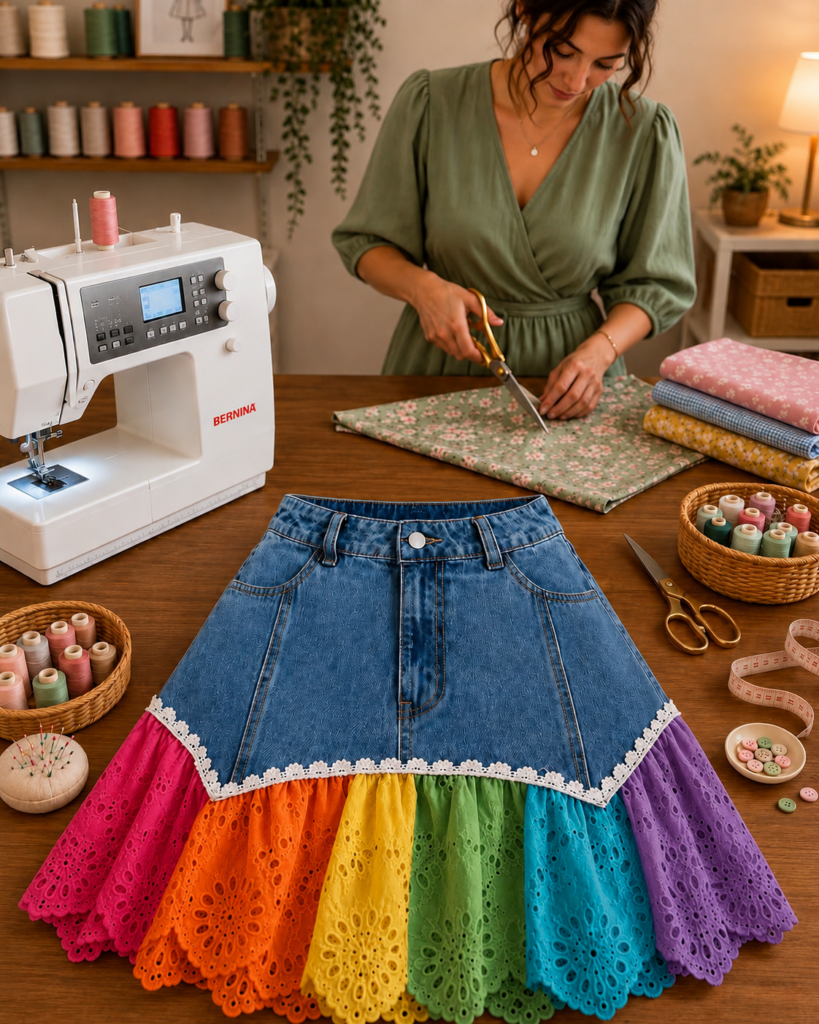
For the Denim Skirt with Lace Ruffle Pattern, you will need denim fabric or an existing denim skirt or pair of jeans, decorative lace or embroidered eyelet fabric, coordinating all-purpose thread, sewing pins or clips, fabric scissors or a rotary cutter, measuring tape, fabric marker, sewing machine, iron, and ironing board. A denim needle is highly recommended when sewing through thicker areas.
If constructing the upper skirt from scratch, approximately 1 to 1½ yards (0.9–1.4 m) of medium-weight denim will be sufficient for many adult sizes, although larger sizes or directional fabrics may require more. For the ruffle, approximately 1½ to 2½ yards (1.4–2.3 m) of fabric is a useful starting estimate.
Choose denim that is sturdy but not excessively heavy. A medium-weight denim is easier to gather with another fabric and more comfortable for a skirt than very heavy workwear denim. A small amount of stretch can also improve comfort.
The decorative lower section is one of the most important features. Embroidered cotton eyelet works especially well because it has the visual delicacy of lace while still having enough structure to create a generous ruffled skirt hem.
Measure the wearer around the natural waist and fullest part of the hips. Also determine the desired total skirt length. Record every measurement before cutting.
For example, if you want a finished skirt approximately 22 inches (56 cm) long and a ruffle approximately 8 inches (20 cm) deep, the denim portion can finish around 14 inches (36 cm) long. These measurements are only examples and should be adjusted for the intended wearer.
If using an existing pair of jeans, put them on and mark where you want the denim section to finish. The cut line should be below the desired finished denim length because a seam allowance is needed for attaching the ruffle.
Remove the jeans and lay them completely flat. Use a ruler and fabric marker to establish an even cutting line around the garment.
When converting jeans into a skirt, the inner leg seams will usually need to be opened. Carefully remove stitches with a seam ripper rather than cutting through usable denim.
Overlap or rearrange the front and back crotch sections until they lie flat. Pin everything before stitching. Depending on the original jeans, small triangular denim inserts may be necessary to eliminate gaps.
If constructing a skirt from denim yardage instead, create front and back panels using your waist, hip, and length measurements. Include approximately ⅝ inch (1.5 cm) seam allowance unless your preferred construction method uses another allowance.
Before cutting expensive fabric, consider making a quick test version from inexpensive cotton. This is especially helpful if you are drafting the upper skirt rather than altering an existing garment.
Once the denim pieces are prepared, sew the main seams of the upper skirt. Use a slightly longer machine stitch—approximately 2.8 to 3.2 mm—for medium-weight denim. A longer stitch generally handles thick fabric more comfortably than a very short stitch.
Finish raw denim seams with a serger, zigzag stitch, or overcast stitch. Denim can fray considerably after repeated washing, so clean seam finishing makes the Denim Skirt with Lace Ruffle Pattern more durable.
Press each seam after sewing. Pressing is particularly important around converted-jeans seams because bulky overlapping denim can otherwise create noticeable ridges.
Topstitching can recreate the classic appearance of commercial denim garments. Use regular coordinating thread for a subtle result or heavier topstitching thread for a traditional jeans appearance.
Next, measure the entire circumference of the lower denim edge. This measurement determines the length of the ruffle.
For a moderately gathered ruffle, multiply the lower circumference by approximately 1.5. For a fuller, more dramatic ruffle similar to the inspiration image, multiply it by approximately 1.75 to 2.
For example, if the skirt opening measures 40 inches (102 cm) around, a moderately full ruffle could measure approximately 60–70 inches (152–178 cm) before gathering. A very full version could approach 80 inches (203 cm).
Cut strips of eyelet or lace fabric to the desired ruffle depth plus seam allowance. If the fabric already has a beautiful scalloped finished edge, position that edge at the bottom so you do not need to hem it.
Join the short ends of the ruffle strips with right sides together. Press the seams open or toward one side, depending on the fabric.
Finish these joining seams carefully. Sheer or lightweight decorative fabrics may benefit from a narrow French seam, while cotton eyelet can generally be finished with a serger or zigzag stitch.
Sew two parallel rows of long machine basting stitches along the upper edge of the ruffle. Do not backstitch at either end.
Leave long thread tails. Pull the bobbin threads gently to gather the fabric.
Distribute the gathers evenly rather than allowing large bunches to accumulate in isolated areas. The goal is a soft, continuous ruffle around the entire skirt.
Before attaching it permanently, pin or clip the gathered ruffle around the denim base and place the garment on a dress form or carefully hold it against the wearer. This gives you an opportunity to adjust fullness.
Divide both the denim hem circumference and gathered ruffle into four equal sections. Mark the center front, center back, and both sides. Matching these quarter marks helps distribute the gathers evenly.
With right sides together, position the gathered edge of the lace against the lower denim edge. Match all quarter marks and pin securely.
Sew around the entire circumference using approximately a ⅜–⅝ inch (1–1.5 cm) seam allowance, depending on how you prepared the pieces.
Take your time while stitching over the gathers. Do not stretch the denim excessively, and make sure the gathers remain perpendicular to the seam rather than folding sideways.
After stitching, inspect the seam from both sides. Correct any accidental pleats or areas where the lace was not captured before finishing the seam allowance.
Finish the raw seam using an overcast or zigzag stitch. Then press the seam allowance upward toward the denim.
Topstitch approximately ⅛–¼ inch (3–6 mm) above the joining seam. This keeps the seam allowance facing upward and helps the ruffle fall cleanly.
The reference design also features a narrow decorative trim between the denim and the large ruffle. This small detail creates a polished transition between the two very different fabrics.
To recreate it, use cotton lace trim, embroidered braid, ric-rac, narrow eyelet trim, or another washable decorative trim. Pin it directly over the joining seam.
Sew along both edges of the trim using matching thread. If the trim is extremely narrow, a single centered stitching line may be sufficient.
For a romantic denim and lace skirt, choose trim that coordinates with the ruffle rather than matching the denim. Beige, cream, dusty pink, ivory, and natural cotton shades all pair beautifully with blue denim.
If you prefer a cleaner contemporary appearance, skip the decorative trim entirely. The gathered ruffle itself provides plenty of visual interest.
Check the ruffle from every angle after attaching it. The finished lower edge should hang evenly without noticeable high or low sections.
If using unfinished lace rather than scalloped eyelet, create a narrow double-fold hem. Fold approximately ¼ inch (6 mm) twice, press, and stitch close to the inner fold.
A rolled hem is another excellent option for lightweight fabric. Test the technique on a scrap first because delicate fabrics can behave differently depending on weave and embroidery.
Try on the completed Denim Skirt with Lace Ruffle Pattern before making any final adjustments. Check the waist, hip fit, total length, and how the ruffle moves when walking.
If the denim section feels too restrictive, adjust the side seams if sufficient allowance remains. Stretch denim can be particularly useful for creating a fitted silhouette without sacrificing comfort.
If the ruffle appears too flat, additional gathering can create more volume. Conversely, if it feels excessively bulky, remove a section of the ruffle circumference and redistribute the gathers.
One beautiful variation is a double lace ruffle skirt. Add a shorter upper ruffle over the main lower layer to produce extra dimension.
You can also create a patchwork ruffle using several coordinating cotton fabrics. This works particularly well for anyone who enjoys quilting and wants to incorporate fabric scraps into wearable projects.
Another variation is to replace the lace with floral cotton. A blue denim skirt combined with vintage floral fabric creates a charming cottage-inspired appearance.
For a Western style, combine dark denim with cream eyelet and decorative topstitching. Small embroidered details can also be added around the pockets.
Existing jean pockets are worth preserving whenever possible. They maintain the authentic denim appearance and provide practical storage.
If constructing the skirt from scratch, consider adding curved front pockets and traditional topstitching before assembling the main panels. It is much easier to complete these details while the pieces are still flat.
Prewash both denim and cotton ruffle fabric before construction. Natural fibers can shrink, and different fabrics may shrink at different rates.
Wash the finished skirt according to the requirements of the most delicate material used. If the ruffle contains fragile embroidery or lace, a gentle washing cycle or hand washing may help maintain its appearance.
Press the denim normally according to its fiber content, but use lower heat around synthetic lace. Always test heat on a scrap first.
For a professional-looking result, pay special attention to the transition between the structured denim and lightweight ruffle. Even gathering, straight topstitching, and careful pressing make an enormous difference.
The finished Denim Skirt with Lace Ruffle Pattern can be customized for adults, teenagers, or children simply by changing the waist, hip, denim length, and ruffle measurements.
Can I make this pattern from an old pair of jeans?
Yes. Upcycling jeans is one of the easiest ways to create this project because the waistband, zipper, pockets, and much of the fitting work are already completed.
What fabric should I use for the ruffle?
Cotton eyelet, embroidered cotton, lightweight lace, voile, lawn, or soft quilting cotton can all work well.
How much ruffle fabric do I need?
Measure the bottom circumference of your denim section and multiply it by approximately 1.5 to 2, depending on the desired fullness.
What is the best gathering ratio?
A 1.5:1 ratio creates gentle gathering. Around 2:1 produces a much fuller and more dramatic ruffle.
Do I need a special sewing machine for denim?
No. Most domestic sewing machines can sew medium-weight denim when equipped with an appropriate denim needle.
What needle should I use?
A denim or jeans needle around size 90/14 or 100/16 is suitable for many medium-weight denim projects. Match the needle to the actual fabric thickness.
Can quilting cotton be used for the ruffle?
Yes. Quilting cotton creates a slightly more structured ruffle than lightweight eyelet or voile.
Should I prewash the fabrics?
Yes, especially when combining cotton denim with another cotton fabric. Prewashing reduces the possibility of uneven shrinkage later.
How wide should the ruffle be?
Approximately 7–10 inches (18–25 cm) works well for a noticeable lower ruffle, but the proportion can be customized.
Can I make the skirt longer?
Absolutely. Increase either the denim portion, the ruffle depth, or both.
How do I keep the gathers even?
Divide the skirt and ruffle into quarters, match the corresponding marks, and distribute the gathers evenly between them.
Can I add two ruffles?
Yes. Two overlapping ruffles can produce a fuller, layered appearance.
What seam allowance should I use?
Approximately ⅜–⅝ inch (1–1.5 cm) is practical for this project, provided you use the same allowance consistently.
Can decorative lace trim hide the joining seam?
Yes. Narrow lace or embroidered trim is an excellent way to conceal the seam while adding another decorative detail.
Is this project suitable for beginners?
A version made from an existing denim skirt is beginner-friendly. Converting jeans or constructing the entire denim skirt from scratch requires slightly more sewing experience.
The Denim Skirt with Lace Ruffle Pattern is a creative way to combine sturdy everyday denim with a soft decorative fabric. The basic process involves preparing a fitted denim base, measuring its lower circumference, cutting a longer strip of eyelet or lace, gathering that strip evenly, and sewing it securely around the bottom of the skirt.
The most important details are accurate measurements and careful gathering. A ruffle approximately 1.5 to 2 times the circumference of the denim opening provides attractive fullness, while a depth of roughly 7–10 inches (18–25 cm) creates the prominent decorative effect seen in the inspiration.
This project is also ideal for fabric customization and upcycling. Old jeans can become a completely new denim ruffle skirt, while leftover floral fabrics, embroidered cotton, lace, or quilting scraps can give each version a different personality.
With neat topstitching, evenly distributed gathers, finished interior seams, and decorative trim along the transition, the finished skirt can have a polished handmade appearance while remaining practical enough for everyday wear.
If you make your own Denim Skirt with Lace Ruffle Pattern, leave your sincere opinion and suggestions about the project. It would also be wonderful to hear which combination you would choose—classic blue denim with cream lace, darker denim with floral fabric, or a colorful patchwork ruffle.