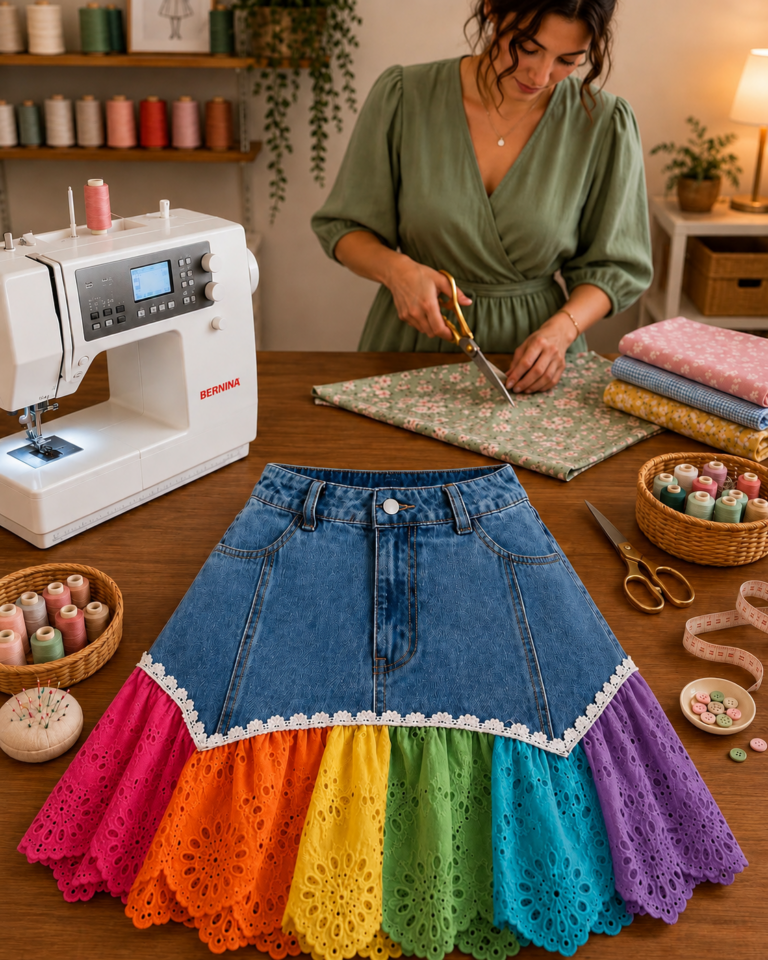
Denim Skirt with Lace Ruffle Pattern

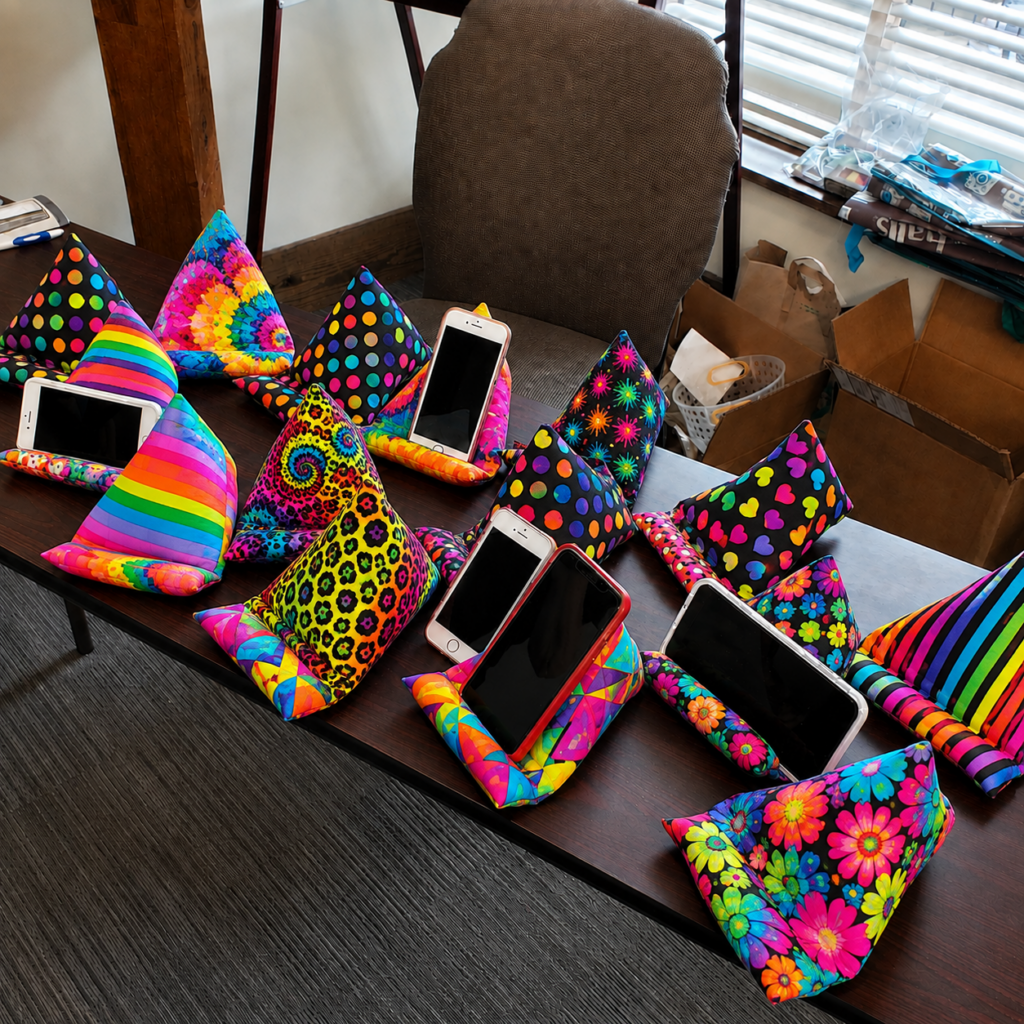
Fabric Cell Phone Holder Pattern is a practical and creative sewing project that transforms a few pieces of fabric, interfacing, and filling into a soft freestanding stand for a smartphone. Inspired by the triangular holders shown in the reference image, this project is ideal for quilters and sewing enthusiasts who enjoy making useful accessories from beautiful cotton prints. The finished holder can support a phone in an upright or slightly angled position, making it convenient for reading recipes, watching videos, following craft tutorials, or simply keeping a device visible on a desk.
The appealing feature of this Fabric Cell Phone Holder Pattern is its three-dimensional triangular structure. Unlike a flat phone pocket, the padded body creates its own support, while a small raised ledge at the front prevents the device from sliding forward. The design can be made from coordinated quilting cotton, floral prints, polka dots, stripes, scraps, or patchwork. Because each holder requires relatively little fabric, it is also a wonderful project for using leftover pieces from larger quilts.
Although the finished shape looks sophisticated, construction is quite approachable. Accurate cutting, firm interfacing, careful pressing, and sufficient filling are the main ingredients for success. This tutorial provides adaptable measurements because smartphone dimensions vary. A useful finished size for an average phone is approximately 7 in (18 cm) wide at the base, 7–8 in (18–20 cm) high, and 5–6 in (13–15 cm) deep. Always test your particular device before permanently closing the opening.
For one Fabric Cell Phone Holder Pattern, you need approximately ¼ yard (23 cm) of quilting cotton. You can use a single fabric throughout or combine two or three coordinating prints. Medium-weight cotton is particularly suitable because it is stable, easy to sew, and available in countless designs.
You will also need fusible interfacing or lightweight fusible fleece. Interfacing helps the triangular sides maintain their shape, while fleece creates a softer padded appearance. For an especially sturdy holder, use woven fusible interfacing on the fabric and add a thin layer of batting.
For filling, polyester fiberfill works well in the upper triangular section. The bottom should have a little extra weight so the stand does not tip easily when supporting a phone. Fabric scraps can provide additional density, or you can make a securely sewn internal pouch containing weighted filling. Keep any loose granular filling completely enclosed in a separate inner pouch.
A practical starting pattern is a rectangle approximately 10 × 14 in (25 × 36 cm). This can be adjusted for larger phones or tablets. Add approximately ¼–⅜ in (6–10 mm) seam allowance unless your pattern dimensions already include it.
For the front support ledge, prepare a small strip approximately 2½ × 7 in (6.5 × 18 cm). Once folded, sewn, and lightly stuffed, it creates the padded ridge that holds the bottom edge of the smartphone.
Additional supplies include matching polyester thread, fabric scissors or rotary cutter, cutting mat, quilting ruler, pins or sewing clips, fabric marker, hand-sewing needle, iron, turning tool, and sewing machine. A walking foot can be helpful if you decide to quilt the fabric layers.
Begin the quilted cell phone holder by pressing the fabric thoroughly. Accurate pressing makes an enormous difference when constructing a three-dimensional object because even small distortions can affect how evenly the stand sits.
Cut your main rectangle and corresponding interfacing. Fuse the interfacing to the wrong side of the exterior fabric according to the manufacturer’s directions. If using batting, baste or quilt it to the fabric before assembly.
Fold the main rectangle with right sides together, aligning the shorter edges. Sew the selected seam allowance while leaving an opening that will later be used for turning and filling.
The characteristic triangular shape is produced by manipulating the opposite end so that its seam sits perpendicular to the first seam. Imagine rotating one edge approximately 90 degrees before stitching. This simple construction technique turns a flat fabric tube into a dimensional triangular form.
Before completing the second seam, check the proportions. The back should be tall enough to support most of the phone, while the base must extend sufficiently forward to prevent tipping. For many smartphones, a finished depth of around 5–6 in (13–15 cm) provides a useful starting point.
Trim excess bulk from the corners without cutting through the stitching. Turn the project right side out and carefully push out the corners with a blunt turning tool. Press the seams lightly while preserving the intended three-dimensional shape.
The stability of a Fabric Cell Phone Holder Pattern depends heavily on the base. A holder that is filled only with very soft polyester stuffing may collapse or tip when a heavier smartphone is placed against it.
Create a small internal weighted pouch if additional stability is required. Sew it securely from tightly woven fabric, double-check every seam, and place it at the lowest part of the holder. Alternatively, tightly packed fabric scraps can create a stable base without using granular material.
Fill the remaining triangular body gradually with polyester fiberfill. Add small amounts at a time, pushing the filling toward the corners. The finished stand should feel firm rather than pillow-soft.
Do not overfill the front surface. The phone needs a relatively flat area on which to rest. Concentrate additional filling toward the back and bottom to maintain the triangular silhouette.
Next, prepare the front support strip. Fold it lengthwise with right sides together and stitch along the long edge. Turn it right side out, lightly stuff it, and close the short ends. The resulting piece should resemble a small padded tube or bolster.
Position this bolster horizontally across the lower front of the holder, approximately 1–1½ in (2.5–4 cm) above the bottom edge. Temporarily place your phone against the stand to determine the best position before permanently attaching it.
Hand stitch or machine stitch the support securely to the body. It needs enough structure to stop the smartphone from sliding downward but should not be so large that it covers an excessive portion of the screen.
If you want the project to have a stronger quilted appearance, quilt the exterior fabric before assembling the triangular body. Straight parallel lines approximately 1–2 in (2.5–5 cm) apart are simple and attractive.
A diamond quilting design is another excellent option. Mark diagonal guidelines with a removable fabric marker, quilt in one direction, then repeat in the opposite direction. This adds structure while giving the finished fabric phone stand a professional texture.
Patchwork can also be incorporated. Sew small squares, strips, or leftover quilt pieces together until you have a panel large enough for the main pattern. Press all seams carefully before adding interfacing.
Once the holder is satisfactorily filled, close the turning opening with a neat ladder stitch. Small, nearly invisible hand stitches produce the cleanest finish.
Test the finished stand with your phone in both portrait and landscape orientations. If it tips backward, the base may need additional weight. If the phone slides forward, enlarge or reposition the front support ledge.
Remember that this Fabric Cell Phone Holder Pattern is intended as a passive stand. Avoid covering a charging device with thick fabric, and do not position the holder near candles, stovetops, heaters, or other sources of heat.
What is a Fabric Cell Phone Holder Pattern?
A Fabric Cell Phone Holder Pattern is a sewing template used to make a padded freestanding support that holds a smartphone at a comfortable viewing angle.
Is this project suitable for beginners?
Yes. A basic version primarily requires straight stitching, turning, filling, and a little hand sewing.
What fabric works best?
Quilting cotton is one of the easiest materials to use because it holds its shape well when combined with interfacing.
How much fabric do I need?
Approximately ¼ yard (23 cm) is usually enough for one standard phone holder, although requirements vary with the chosen dimensions.
Can I use fabric scraps?
Absolutely. This is an excellent scrap fabric sewing project, particularly when the exterior is pieced in a patchwork style.
What size should I make the holder?
For an average smartphone, aim for approximately 7 in (18 cm) of base width, 7–8 in (18–20 cm) of height, and 5–6 in (13–15 cm) of depth.
How do I make the stand stable?
Use firm interfacing and concentrate weight toward the bottom. The triangular structure should also be filled firmly enough to maintain its shape.
Can I make one for a tablet?
Yes, but increase all dimensions and use considerably stronger interfacing. Larger devices require a wider and heavier base.
What is the front padded piece for?
The small horizontal bolster acts as a phone stop, preventing the device from sliding down the angled surface.
Can I quilt the fabric first?
Yes. Pre-quilting the exterior is one of the best ways to give the project additional body and a traditional quilted appearance.
Can I use fusible fleece?
Yes. Fusible fleece creates a soft but structured exterior and works particularly well for this type of project.
How much seam allowance should I use?
Approximately ¼–⅜ in (6–10 mm) works well.
Can I wash the holder?
If you want it washable, use washable filling materials and avoid loose weighted materials unless they are specifically suitable for laundering.
Can I add a charging-cable opening?
You can leave an appropriate space around the lower support, but make sure the device remains adequately ventilated while charging.
Why does my holder keep falling backward?
The base may be too narrow, the upper portion may be overstuffed, or there may not be enough weight concentrated toward the bottom.
Can I sell finished holders made from my own version of this tutorial?
You can create your own finished handmade items from your independently drafted version. If using commercial fabrics or another designer’s pattern, check any applicable licensing terms separately.
The Fabric Cell Phone Holder Pattern is a clever way to turn basic quilting materials into a genuinely useful accessory. With a triangular padded body and small front support ledge, the finished holder keeps a smartphone upright without requiring plastic or metal hardware.
The basic construction is also highly customizable. Floral fabrics can create a traditional country look similar to the reference image, while polka dots, stripes, geometric prints, solids, and colorful patchwork scraps can produce completely different styles.
For the best results, concentrate on three details: a firm triangular structure, a stable base, and correct placement of the front support. Test the phone before permanently closing the project so you can adjust the viewing angle and filling density.
VIDEO PATTERN:
Once you understand the basic Fabric Cell Phone Holder Pattern, it is easy to make additional versions as practical handmade gifts or scrap-friendly sewing projects. Try different fabric combinations, quilting designs, sizes, and decorative finishes, and leave your sincere opinion and suggestions about which version you would most like to make.